The crude oil price impact on solvents is back at the top of every buyer’s mind this week. On 28 October 2026 Brent crude traded at about $115 a barrel, and India’s own crude basket has averaged more than $120 a barrel in October, its highest monthly average since March 2012. For paint, ink, adhesive, plastic and rubber manufacturers, this is not just a fuel story. Most solvents, many resins, waxes and polymers are made from petroleum, so their prices tend to follow crude after a short delay.
In this article we explain what has happened to oil prices, which raw materials are most exposed, and the practical steps buyers in India can take now to protect supply and margins.
Crude oil this week: the key numbers
Here is what the latest reports say:
- Brent and WTI: On 28 October 2026, Brent was quoted at $115.11 a barrel and WTI at $101.65, both up on the day, according to 5paisa’s market update. The same report mentions an unconfirmed claim by Yemen’s Houthis of a missile attack on a major Saudi refinery.
- India’s crude basket: Business Today reports that the Indian basket averaged $120.46 a barrel in October (up to 26 October), up about 4% from $116.77 in September, and touched $123.72 on 26 October.
- Physical crude even higher: The same report cites Axis Bank Research saying Dated Brent touched $140 a barrel, and notes that global crude prices have risen about 80% in 2026.
- Bigger import bill: India’s crude import bill rose 46.3% year-on-year to $90.6 billion in April–September.
- Fuel prices may follow: Energy expert Narendra Taneja told Business Today that petrol and diesel prices could rise between Diwali and Christmas, as the government and oil companies cannot absorb the cost forever.
West Asia tensions are also pushing up marine insurance and freight rates, which adds to the landed cost of every imported chemical, not only crude.
Crude oil price impact on solvents: which ones move first
Solvents are the raw materials that react fastest to crude. Many are produced from refinery streams or from petrochemicals made from naphtha and gas, so when crude stays high for weeks, suppliers revise their offers quickly.
Aromatic solvents
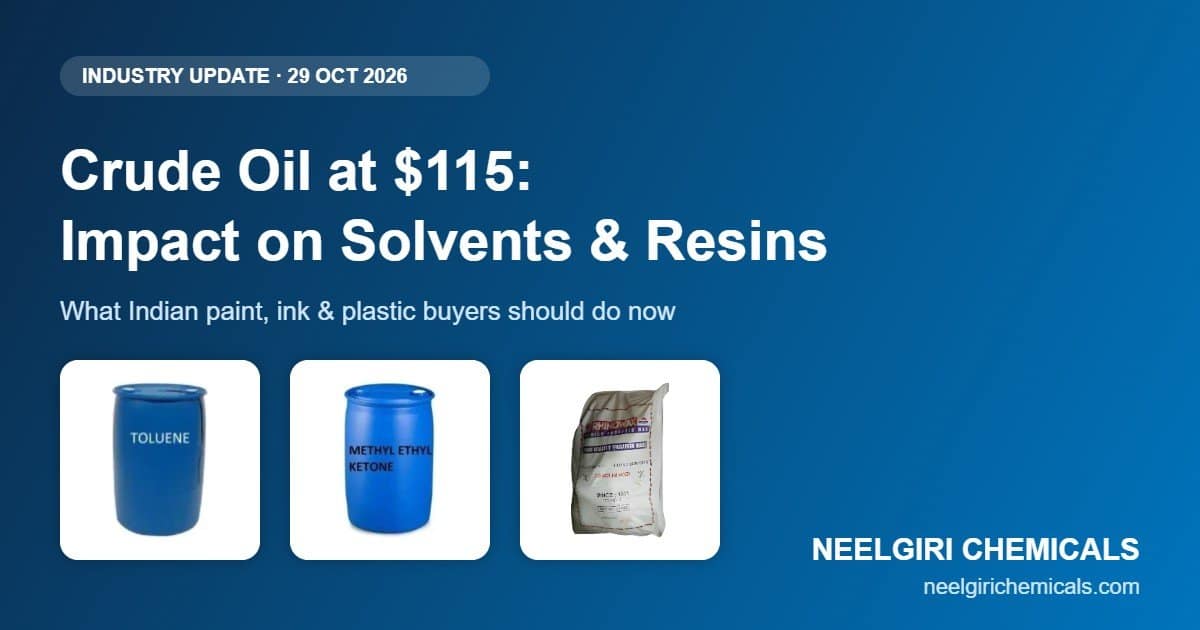
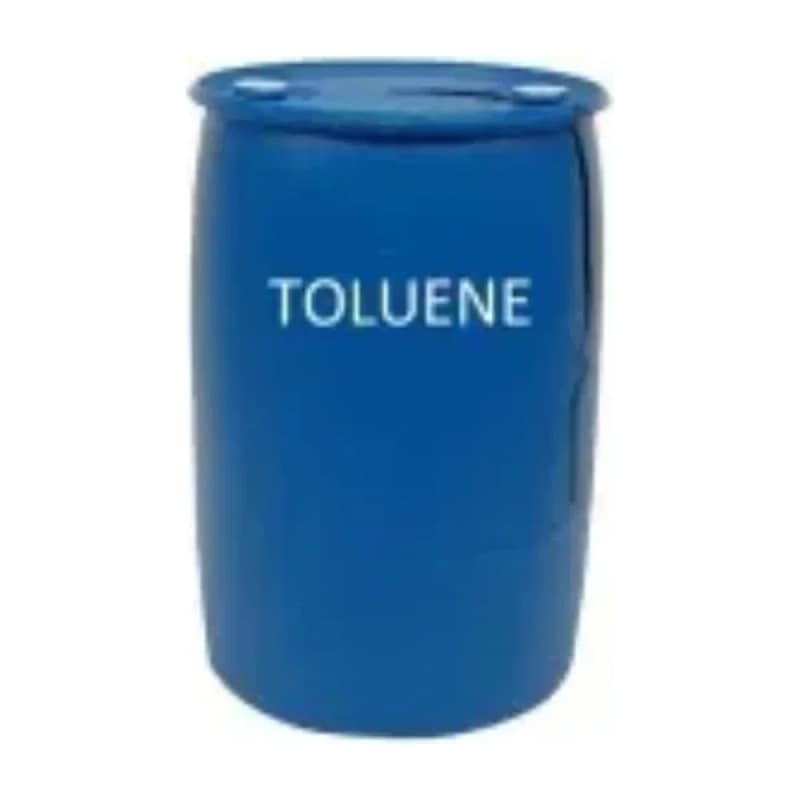
Toluene and xylene come straight from refinery and aromatics streams. They are used in solvent-based paints, thinners, printing inks, adhesives and rubber processing. These are usually the first solvents where buyers see a price change.
Ketones and alcohols
MEK, MIBK and isopropanol (IPA) are made from petrochemical feedstocks such as butenes and propylene. Their prices also depend on plant outages and imports, but a long period of high crude usually pushes them up too. These solvents are important for nitrocellulose lacquers, PU coatings, flexo and gravure inks and cleaning applications.
The overall effect: in solvent-rich products such as thinners, lacquers and liquid inks, the crude oil price impact on solvents can hit your cost per litre harder than a change in pigment price.
Resins, waxes and polymers are exposed too
Solvents are not the only concern. Several other raw materials are made from petroleum fractions:
- Hydrocarbon resins: C5 and C9 hydrocarbon resins are made from by-product streams of naphtha cracking. They are used in road-marking thermoplastic paint, hot-melt adhesives, printing inks and rubber compounds.
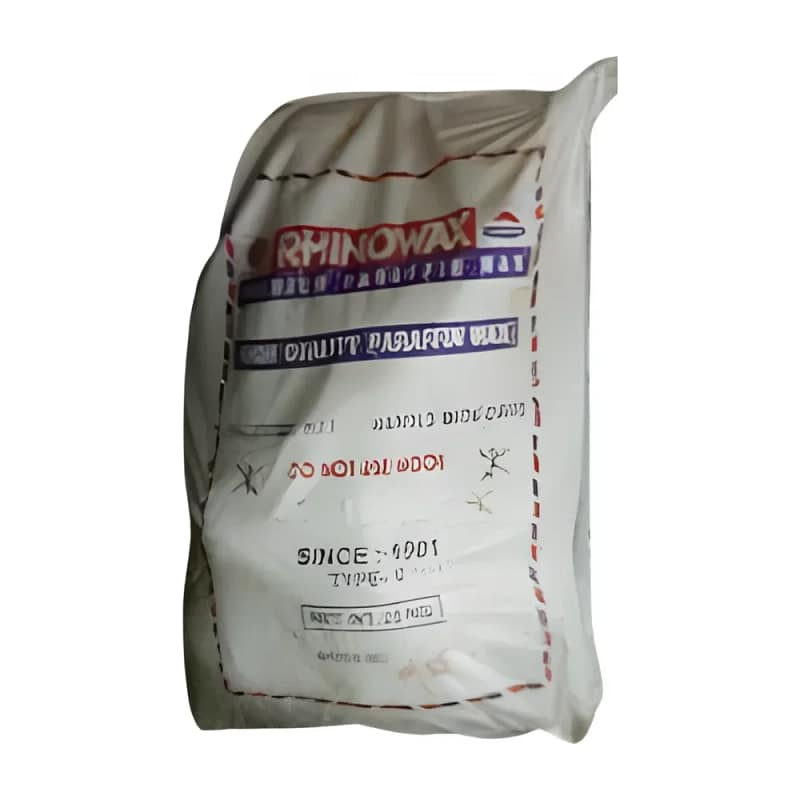
- Paraffin and PE waxes: Paraffin wax comes from crude refining, so its price is linked to refinery economics. It is widely used in road-marking compounds, rubber, PVC processing, candles and coatings.
- Polymers: PVC, PP, PE and EVA are made from ethylene and propylene. Earlier this year, when crude first spiked on West Asia tensions, industry estimates reported by Procurement Resource showed PP prices up about 60%, PVC about 55% and PE about 49% in March 2026.
Mineral raw materials such as calcium carbonate, quartz and barytes are not made from oil. But their delivered cost still rises when diesel and freight go up, so they are not fully protected either.
Who feels it most
- Solvent-based paint, thinner and lacquer makers: solvents are a large share of the formula.
- Printing ink manufacturers: they use solvents, resins and nitrocellulose together, so costs rise on several lines at once.
- Road-marking paint producers: thermoplastic compounds use C5/C9 hydrocarbon resin and wax as binders, both crude-linked.
- Adhesive makers: hot-melt and solvent-based adhesives depend on hydrocarbon resins, EVA and solvents.
- Plastic and rubber processors: polymers, process oils and waxes all follow petrochemical prices.
Large paint companies have already announced price hikes for November, which we covered in our article on the paint price hike November 2026. Smaller manufacturers usually feel the cost pressure first and can pass it on only later.
7 practical steps for raw material buyers
- Recalculate your formula cost today. Use current solvent and resin rates, not last month’s. Know your cost per litre or per kilo before you quote customers.
- Secure 4–8 weeks of key solvents. If you have storage and cash flow, buying a little extra before the next revision can protect you from the next jump. Do not overstock products with a short shelf life.
- Ask for fixed-price or short-validity offers in writing. In a fast market, offers often have short validity. Confirm quantity, price and dispatch date together.
- Review your solvent blend. In some thinners and inks, the ratio of aromatic solvents, ketones and alcohols can be adjusted. Always test drying time, viscosity, odour and film quality before changing a formula.
- Check resin alternatives. Different grades of C9, C5/C9 or hydrogenated hydrocarbon resin vary in softening point, colour and price. A lab trial may find a grade that works at a better cost.
- Add a price clause to your own quotes. For long tenders and contracts, especially road-marking jobs, include a raw material price variation clause or keep validity short.
- Plan freight carefully. Combine orders into full loads where possible. With diesel prices possibly rising after Diwali, freight is a cost you can still control.
How Neelgiri Chemicals can help
Neelgiri Chemicals supplies solvents, resins, waxes, polymers and minerals to paint, ink, coating, plastic, rubber and road-marking manufacturers across India. When prices move this fast, we help you with current rates, ready stock and grade advice:
- Industrial solvents – toluene, MEK, MIBK, ethyl acetate and IPA
- C5/C9 hydrocarbon resins, including L100 C9 hydrocarbon resin
- Industrial waxes such as paraffin wax
- EVA grades for hot-melt adhesives and compounding
- Calcium carbonate and other fillers to help balance formula cost
Share your monthly requirement and we will suggest the best grade and buying plan for the current market.
Frequently Asked Questions
Why do solvent prices go up when crude oil rises?
Many industrial solvents such as toluene, xylene, MEK and IPA are made from refinery streams or petrochemicals derived from crude oil and gas. When crude stays high, feedstock costs rise and suppliers revise solvent prices, usually after a short delay.
What is the crude oil price in India right now?
According to Business Today, India’s crude import basket averaged $120.46 per barrel in October 2026 (up to 26 October), its highest monthly average since March 2012. Brent was quoted around $115 per barrel on 28 October 2026.
Which paint and ink raw materials are most affected by crude oil prices?
Solvents, hydrocarbon resins (C5/C9), paraffin and PE waxes, and polymers such as PVC, PE, PP and EVA are the most crude-linked. Mineral fillers like calcium carbonate are not made from oil, but their delivered cost rises with diesel and freight.
How can small manufacturers reduce the impact?
Recalculate formula costs at current rates, secure a few weeks of key solvents, ask suppliers for written short-validity offers, test alternative solvent blends or resin grades, and add price variation clauses to long contracts.
Get current solvent and resin prices
Prices are changing week to week. For today’s rates and stock availability, talk to Bajrang Goel and the Neelgiri Chemicals team:
- WhatsApp: Chat with us on WhatsApp
- Phone: +91 87961 61378
- Enquiry form: neelgirichemicals.com/contact
Sources: 5paisa, 28 Oct 2026; Business Today, 28 Oct 2026; Procurement Resource, 22 Apr 2026. Prices quoted are market reports at the time of writing and change daily. This article is for general information only and is not financial advice; please confirm current rates before buying.