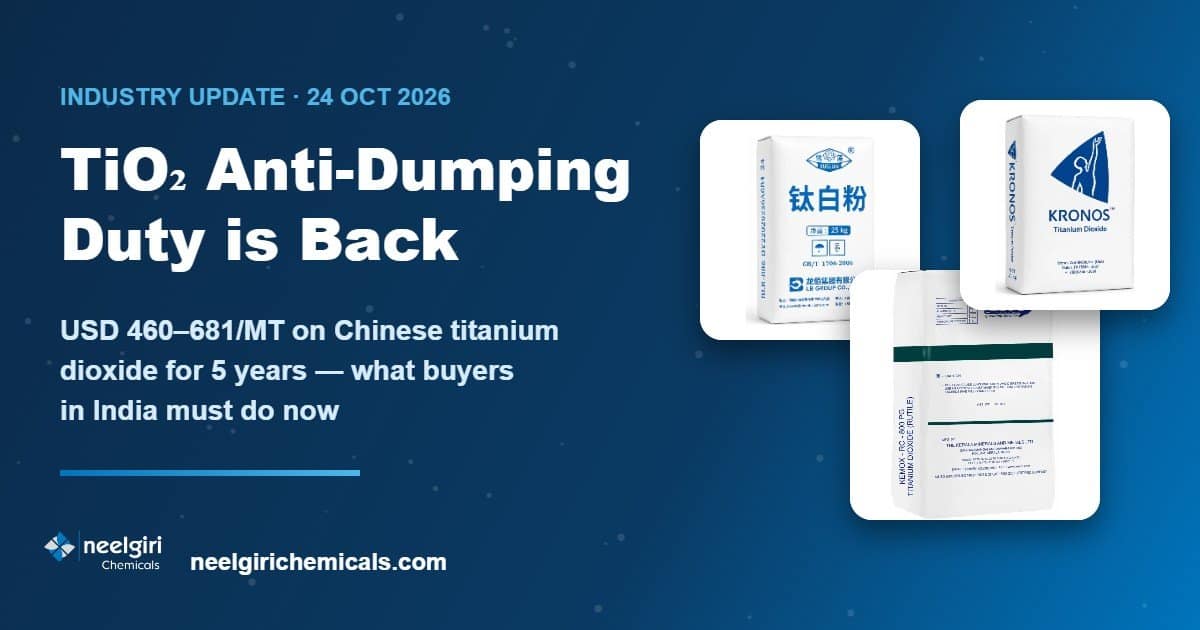
The titanium dioxide anti-dumping duty is back. On 24 October 2026 the Ministry of Finance notified a fresh anti-dumping duty of USD 460 to USD 681 per tonne on TiO₂ imported from China, valid for five years. If your factory uses TiO₂ in paints, coatings, plastics, masterbatch, inks or road marking paint, this change affects your purchase cost from now on.
In this article we explain what the new notification says, which grades and producers are covered, how much it can add to your landed cost, and the practical steps buyers in India should take this week.
What has changed: the TiO₂ duty timeline
This is not the first time the duty has been announced, which is why many buyers are confused. Here is the short timeline:
- Early 2025: DGTR recommended anti-dumping duty on Chinese titanium dioxide after complaints from domestic producers, and the duty was notified.
- 22 September 2025: the Calcutta High Court, in the case filed by the Indian Paint Association, set aside the findings on procedural grounds (disclosure of non-confidential information) and sent the matter back to DGTR.
- December 2025: customs authorities were told to stop collecting the duty, and Chinese TiO₂ entered India duty-free again.
- 3 August 2026: after the remand investigation, DGTR issued fresh final findings with the same duty range of USD 460–681 per tonne.
- 24 October 2026: the Ministry of Finance issued Notification No. 26/2026-Customs (ADD), imposing the duty for five years from its publication in the Official Gazette.
Duty rates by Chinese producer
The duty is charged in US dollars per metric tonne, and the rate depends on which Chinese company made the material:
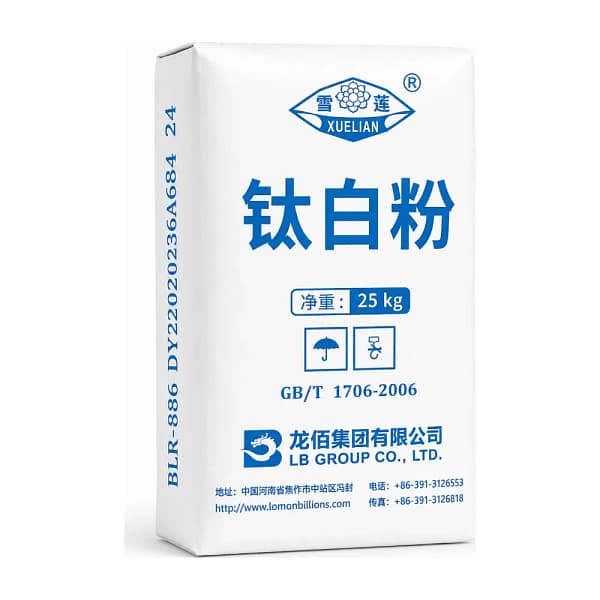
- LB Group companies (including Henan Billions Advanced Material, LB Sichuan, LB Lufeng and LB Xiangyang): USD 460/MT
- Twelve named non-sampled cooperating producers: USD 510/MT
- Shandong Jinhai and Shandong Xianghai: USD 563/MT
- Anhui Gold Star companies: USD 609/MT
- All other producers, and material of any origin exported from China: USD 681/MT
Important: the lower producer-specific rate applies only if the commercial invoice carries a dated, signed declaration naming the producer and country of manufacture. Without that declaration, customs applies the highest rate of USD 681 per tonne.
Which TiO₂ is covered and which is excluded
The duty covers titanium dioxide from China under HS codes 2823 00 10, 3206 11 10 and 3206 11 90. That includes the rutile and anatase pigment grades used by paint, plastic, masterbatch, ink and road marking manufacturers. DGTR also kept rutile-sulphate grades in scope.
The notification excludes TiO₂ used for:
- food additives and pharmaceutical tablet coatings
- skin-care products, cosmetics and sunscreen
- textile and fibre applications such as delustering (pigment for textile printing is still covered)
- rutile grade used for décor paper
- nano or ultrafine TiO₂ below 100 nm
How much will it add to your cost?
According to ChemAnalyst’s analysis of the DGTR findings, on a landed value of around Rs 2.05 lakh per tonne the duty adds roughly 19% for LB Group material and about 28% at the residual rate. The same report notes that Chinese material made up about 57% of Indian demand during the investigation period, so the effect on the market is wide.
For a paint or masterbatch plant, TiO₂ is often the single most expensive raw material in a white formulation. Even a few rupees per kilo changes your cost per litre or per kilo of finished product. Non-Chinese and Indian producers usually adjust their prices when such duties come in, so expect firmer prices across the market, not only on Chinese brands.
What this means for manufacturers in India
Here are practical steps for purchase and formulation teams:
- Check every Chinese TiO₂ invoice for the signed producer declaration. A missing declaration can push your duty to USD 681 per tonne.
- Review open orders and shipments in transit. The duty is not backdated, but it applies from Gazette publication. Talk to your supplier and CHA about bills of entry that are not yet filed.
- Compare total landed cost, not just the basic price. Add the duty, freight, credit period and the grade’s real hiding power before deciding.
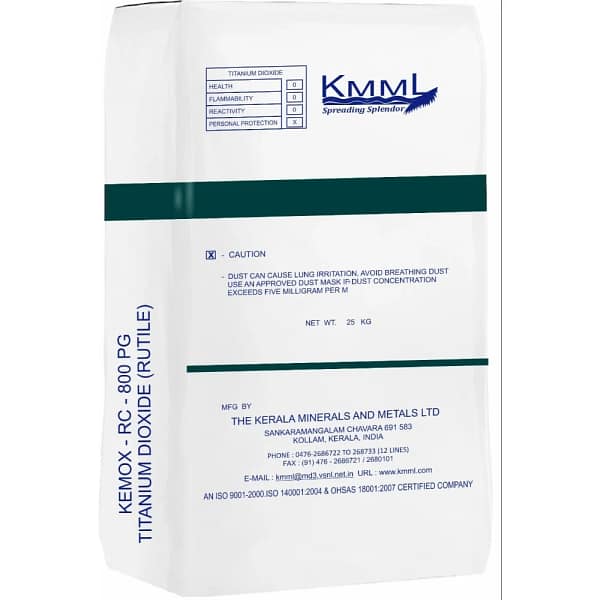
- Evaluate Indian and non-Chinese grades. TiO₂ made in India (for example by KMML and VV Titanium Pigments) and grades produced outside China by international brands such as Kronos, Tronox and Venator are not covered by this duty – always confirm the country of origin on the documents. Run lab trials before switching, because opacity, tint strength and dispersion can differ.
- Optimise loading. Partial replacement with extenders such as calcium carbonate or barium sulphate can reduce TiO₂ use in some formulations, but always test opacity and durability first.
- Plan stock for 2–3 months. Price movement is likely while the market adjusts, so avoid buying hand-to-mouth.
How Neelgiri Chemicals can help
Neelgiri Chemicals supplies a wide range of rutile titanium dioxide and anatase titanium dioxide grades from Indian, international and Chinese producers, including KMML PG-800, OpaTi, Kronos 2222, Tronox CR-828 and Billions BLR-886. We can help you compare landed cost after the new duty and suggest the right grade for your paint, plastic or masterbatch application.
Frequently Asked Questions
What is the new anti-dumping duty on titanium dioxide in India?
Under Notification No. 26/2026-Customs (ADD) dated 24 October 2026, India charges USD 460 to USD 681 per tonne on titanium dioxide from China, depending on the producer, for five years.
Does the duty apply to TiO₂ made in India or other countries?
No. It applies to TiO₂ originating in or exported from China. Indian-made TiO₂ and grades produced outside China are not covered, although their market prices may still move.
Which uses are excluded from the duty?
Food, pharmaceutical tablet coating, cosmetics and skin care, textile and fibre (delustering) uses, rutile grade for décor paper, and nano TiO₂ below 100 nm are excluded. Paint, plastic, masterbatch and ink grades are covered.
What happens if the producer declaration is missing on the invoice?
Customs will apply the highest “all others” rate of USD 681 per tonne, even if the material comes from a producer with a lower rate.
Need help planning your TiO₂ purchases after the new duty? Call or WhatsApp us at +91 98183 07533 or send us an enquiry for grade advice and the latest prices.
Sources: Ministry of Finance Notification No. 26/2026-Customs (ADD) dated 24 October 2026; DGTR final findings dated 3 August 2026. This article is for general information and is not legal or customs advice.